Books

What is the most ethical way of buying books?   The Ethical Consumer has, in October 2025, reviewed online bookshops in the UK.   The highest score (60/100) for the purchase of new books goes to bookstore.org   They also support local independant bookshops and are B corp certified.

The links on this page take you to that store.

Disclosure: If you buy books linked to our site, we may earn a commission from Bookshop.org, whose fees support independent bookshops


This page is just beginning…more books will be added soon.

Just Earth: How a Fairer World Will Save the Planet, Tony Jupiter (2025), Bloomsbury: London.
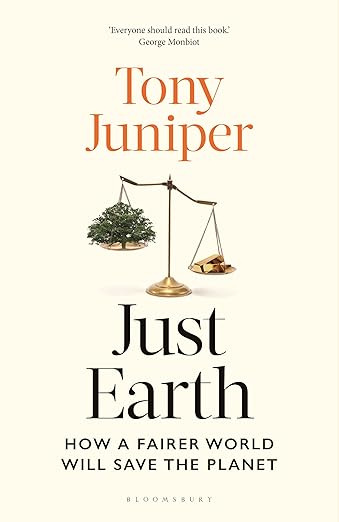


This book takes a systems view of the problems of the economy and of the environment.   The core debate is around how to support a fairer distribution of resources.

The key challenge is framed as a challenge to conventional economics.   By ignoring the true costs to the environment (what economists call externalities) resource allocation is being skewed away from the optimum balance that would ensure safequarding the earth and enabling a fairer world.


Prosperity without Growth: Economics for a Finite Planet, Tim Jackson (2009), Earthscan: London.


Challenges the conventional wisdom of economics: namely that economic growth is the main driver and objective of economic management.   The book provides a vision of an economy where wellbeing and prosperity are not defined by the driver of economic growth.


This is for Everyone, Tim Berners-Lee (2025), Macmillan: London.



The inclusion of this book here might suprise you.   That is deliberate.  The power of the web as originally envisaged by Tim Berners-Lee is the hyperlinks.    These may often open up new avenues of thought.


With a clear self depricating style the importance of standards from the very beginning of the design of the web has enabled it to grow without undue influence by big tech companies.


What can we learn from this approach as we try to design a new economic order?   How can standards be used to create an open, transparent economy?


Green Crime, Julia Shaw (2025) Cannongate: Edinburgh.
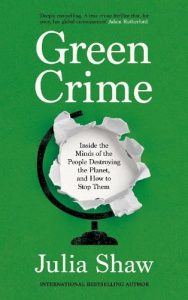


Another book from left field, written by a criminal pscychologist.   Arguably economists have, in the past, overlooked the insights of how people actually behave.   Preferring to assume the behaviour of homo economicus.

Via a number of case studies this book discusses the economic motivations of “green crime”.  By unearthing the economic motives of key players in the market the book has many lessons for those who seek to change markets so that products and distribution become more sustainable.

RSS
Follow by Email
LinkedIn
Share
WhatsApp
Mastodon
IncreasingHappiness